

MRI | Medical Records Interlinked
A personal medical history where every claim leads back to its source. AI proposes, code checks the wording, and nothing enters the record without the patient’s approval.

Overview
Medical history arrives as paper: lab reports, consultation notes, imaging and prescriptions, each from a different clinic and a different year. The facts are there. The thread between them is not.
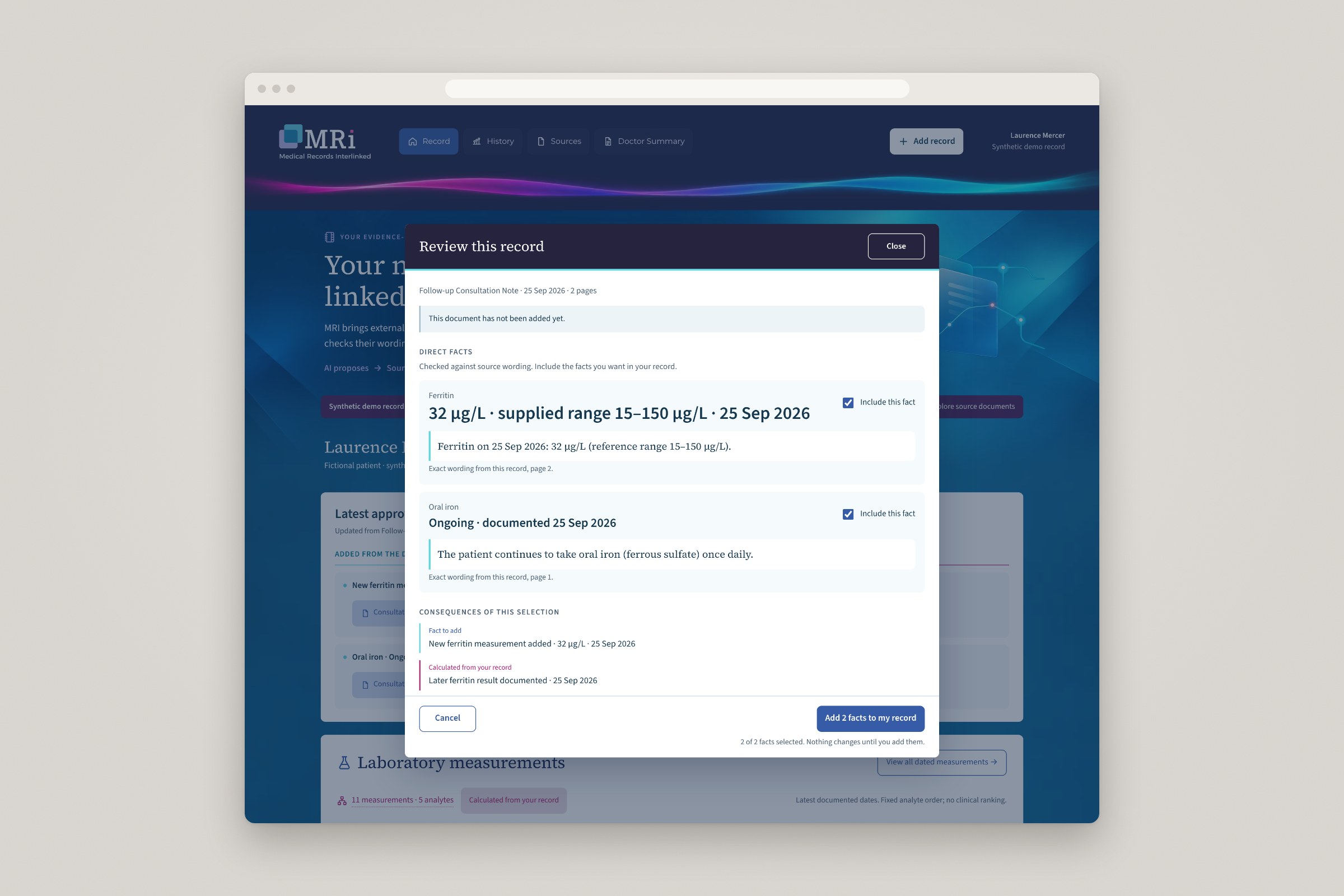
MRI turns those documents into one longitudinal record. A PDF is added, AI proposes the facts it finds, code checks each one against the document’s own wording, and the patient decides what goes in. Then code works out what changed.
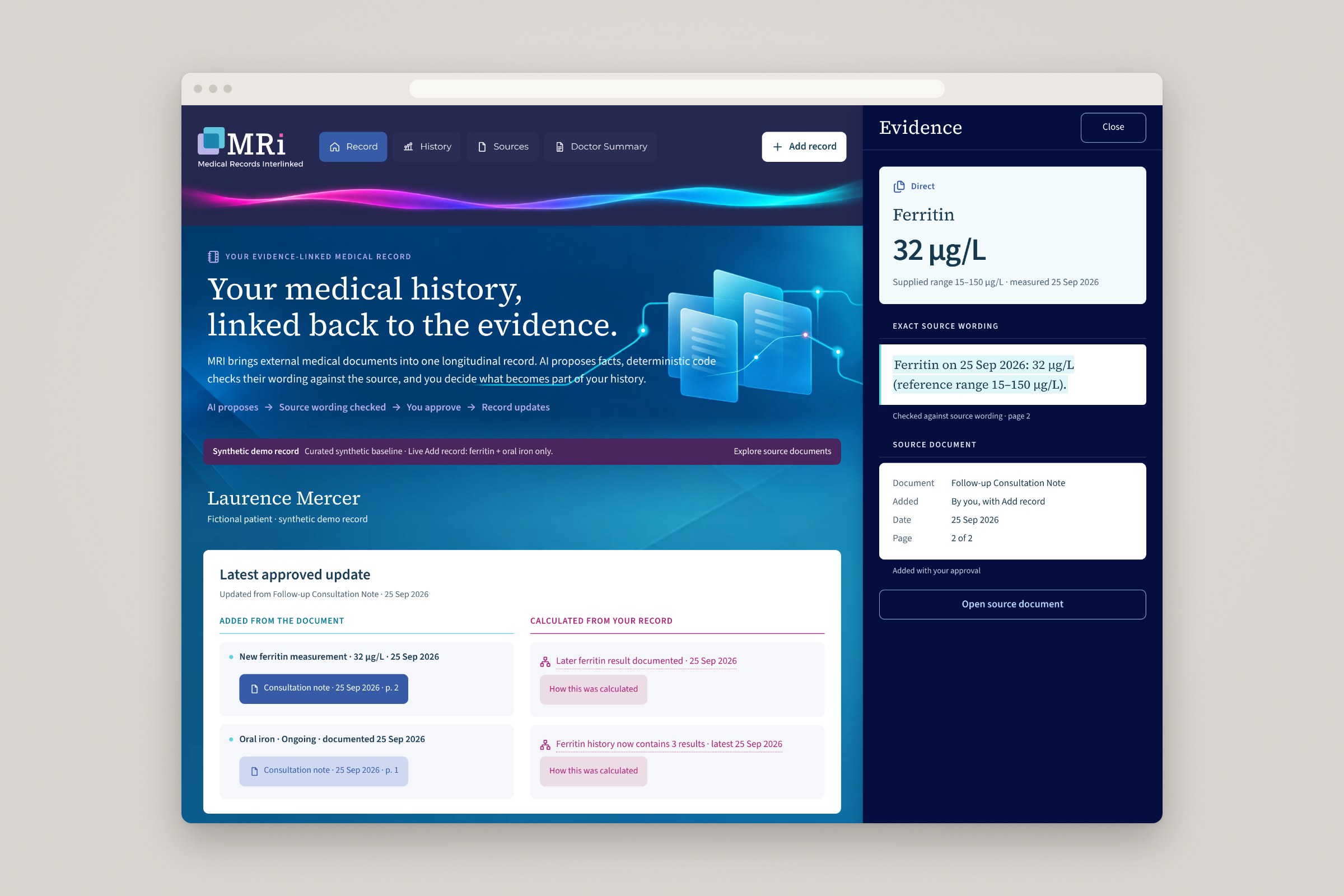
Every value, status and recommendation links back to the exact sentence and page it came from. A doctor, or the patient a year later, can open any line and read its source.
- Add record from a PDF, reviewed before anything is saved
- Exact source wording and page beside every fact
- Direct facts kept apart from calculated statements
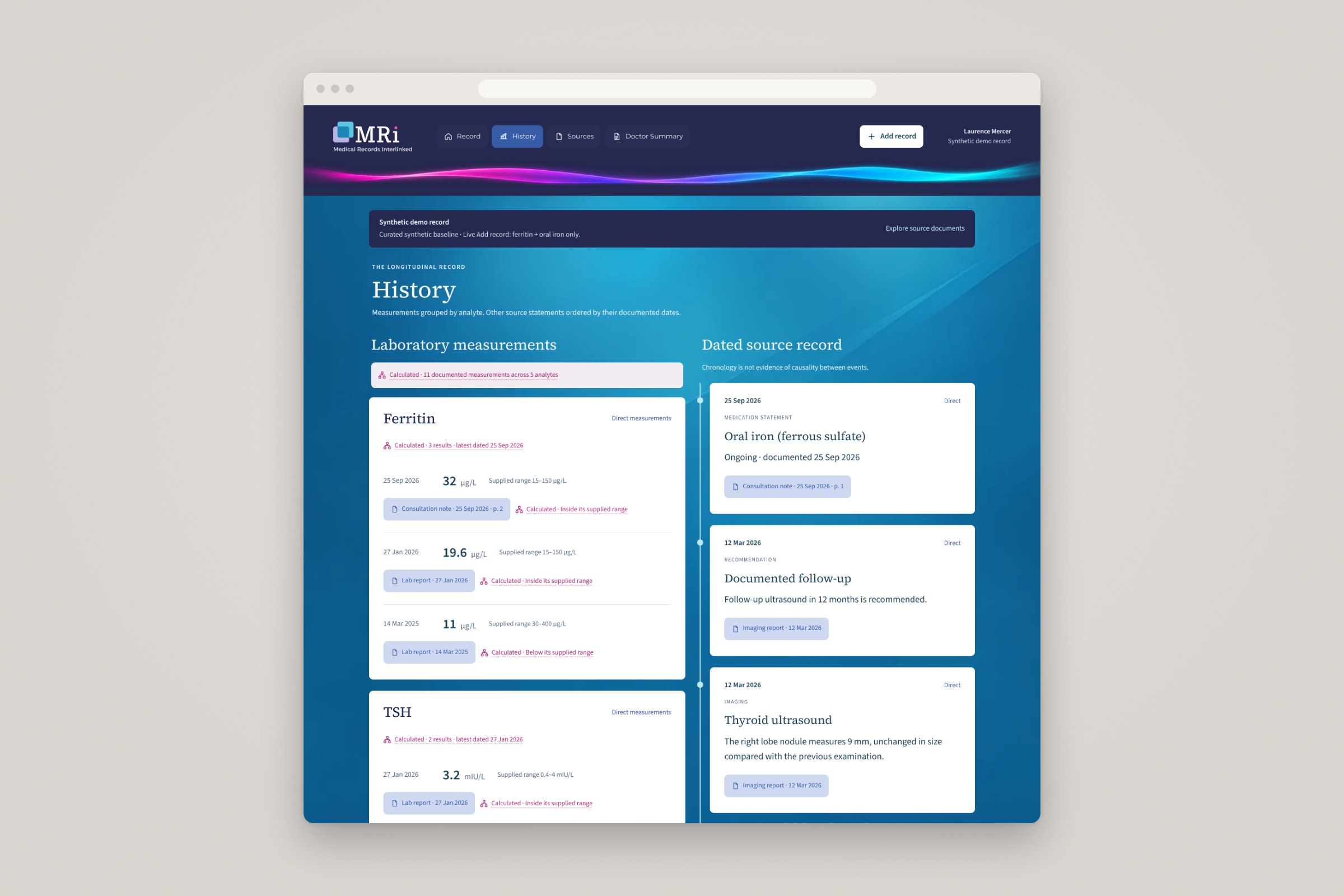
- History by analyte, with a dated source timeline
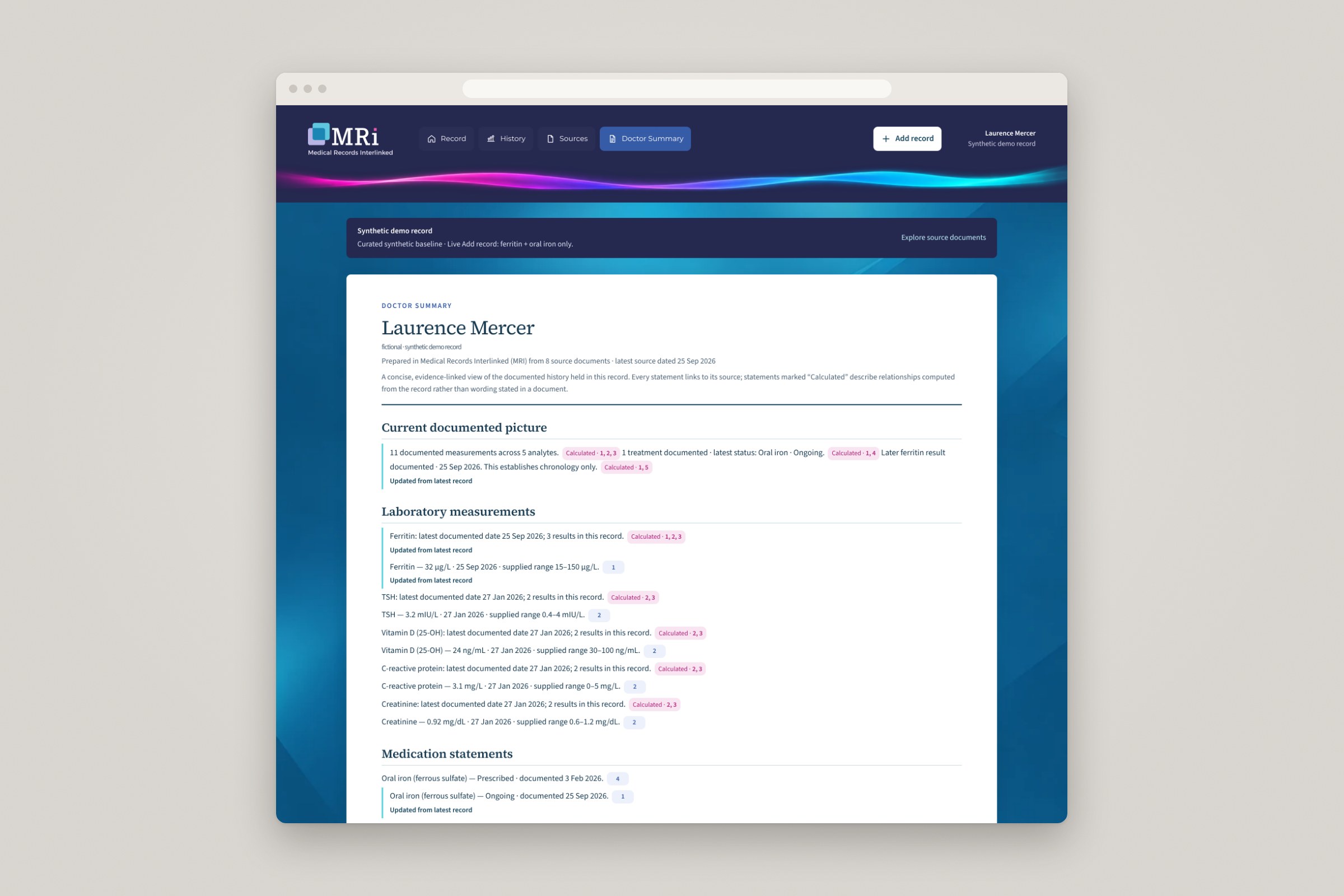
- Doctor Summary with numbered sources on every line
- Desktop and mobile layouts
- Solo EntryDevpost Build With AI: Basics
- 5,110people registered
- 1,084projects in the gallery ↗
Product Logic
The pipeline has four steps, and only the first one is AI: AI proposes, the source wording is checked, the patient approves, the record updates. The model may propose, never decide. A fact that cannot be matched word for word on its cited page is rejected, even if it might be true.
Each of those rules became a design decision. A proposal never appears inside the record. It waits in a separate review layer, beside the exact wording it came from, until the patient adds it. Once approved, every fact keeps its source within reach: one tap opens the sentence, the document and the page.
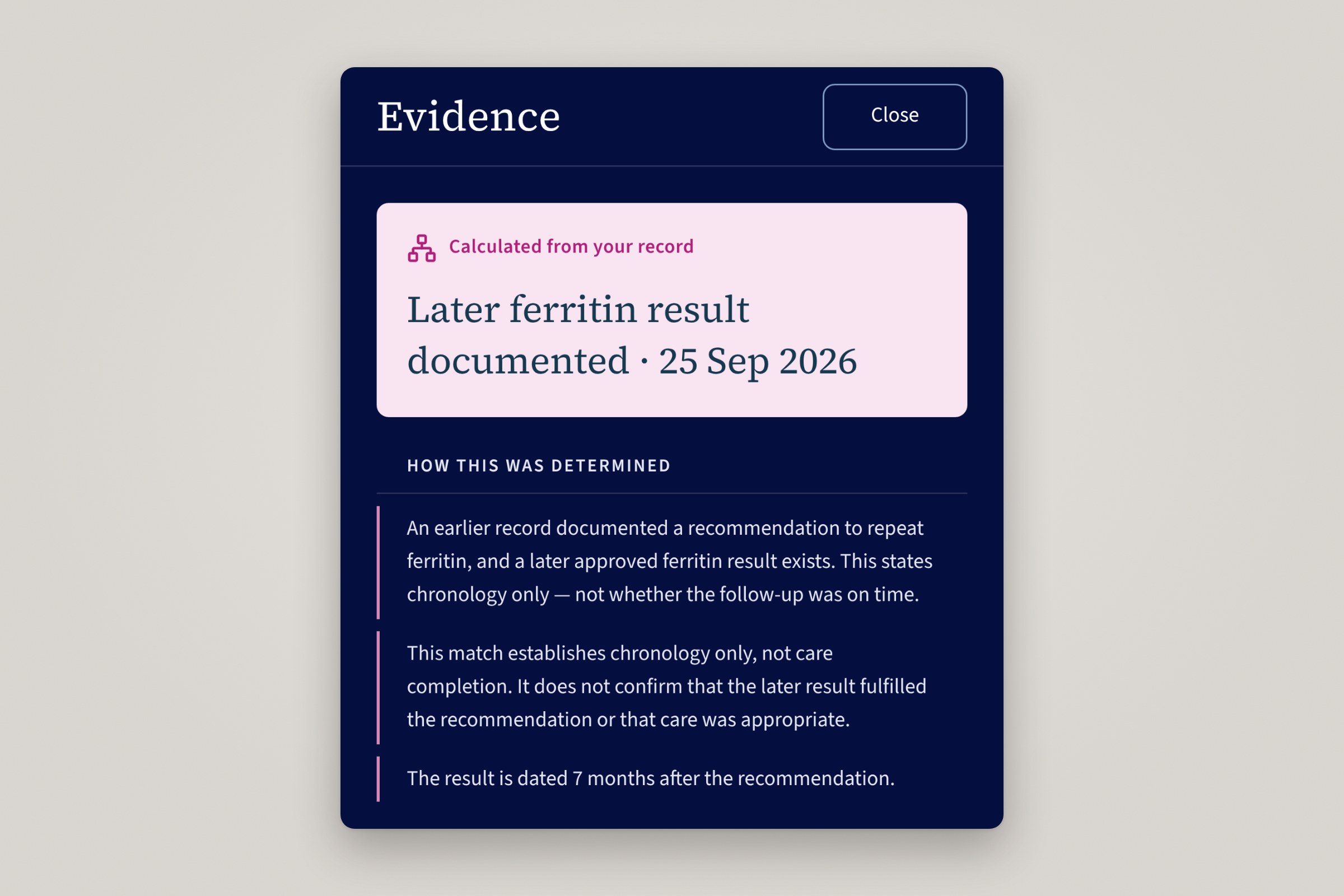
What the app works out is kept visually apart from what a document says. Direct facts carry a quiet blue source chip; calculated statements carry a magenta label and explain their rule. The difference is built into the information architecture, so a reader can tell at a glance whether a line was written in a document or calculated by the app.
Live extraction is deliberately narrow: ferritin results and oral-iron status. A curated synthetic record shows the wider model, with laboratory results across five analytes, imaging, medication, recommendations and a documented incident.
Trust
MRI does not diagnose. It adds no diagnostic labels of its own and never invents statements such as “no current medication”. A later result in the record establishes chronology, not that care was timely or appropriate.
Raw model output is never stored, and the patient can exclude any proposed fact. The Doctor Summary is written from templates, with no AI.
MRI does not replace a national health record such as MyHealth. It demonstrates one narrow thing: the trust pipeline that turns an unstructured document into verified, patient-approved updates.
No medical claim without provenance. If a statement cannot be traced to a document, it does not belong in the record.
Explore the proof of concept
The live prototype uses a fictional patient and synthetic documents only. The repository can also be run locally. MRI is not a medical device, gives no medical advice and must not be used with real medical records.