

Argus Dog Trainer
The website of a dog trainer, redesigned around its existing visual identity and rebuilt from the inside: a theme of its own, a design system, and more than 800 student pages turned into searchable data.

Overview
I designed the Argus website in 2015. Eleven years later it held more than 800 student pages and 623 articles, and I redesigned and rebuilt it: new design, new code and new texts.
The logo and the purple, fuchsia and orange came with the brand. The photographs of the students came from the trainer.
Skills: Web Design · Design Systems · WordPress & Elementor Development · Content Architecture · UX/UI · Content Writing · SEO & AI Search
- 800+Student pages
- 623Articles since 2007
- 11 yearsBetween the first site and this one
Redesign
I designed the home page first and approved it section by section. The design system was then measured off it: the small label above each heading, the lead under it, the spacing between sections, the brand's colours as tokens. Internal pages take their values from the same file, so a lesson page, a dog's page and an article read as one site.
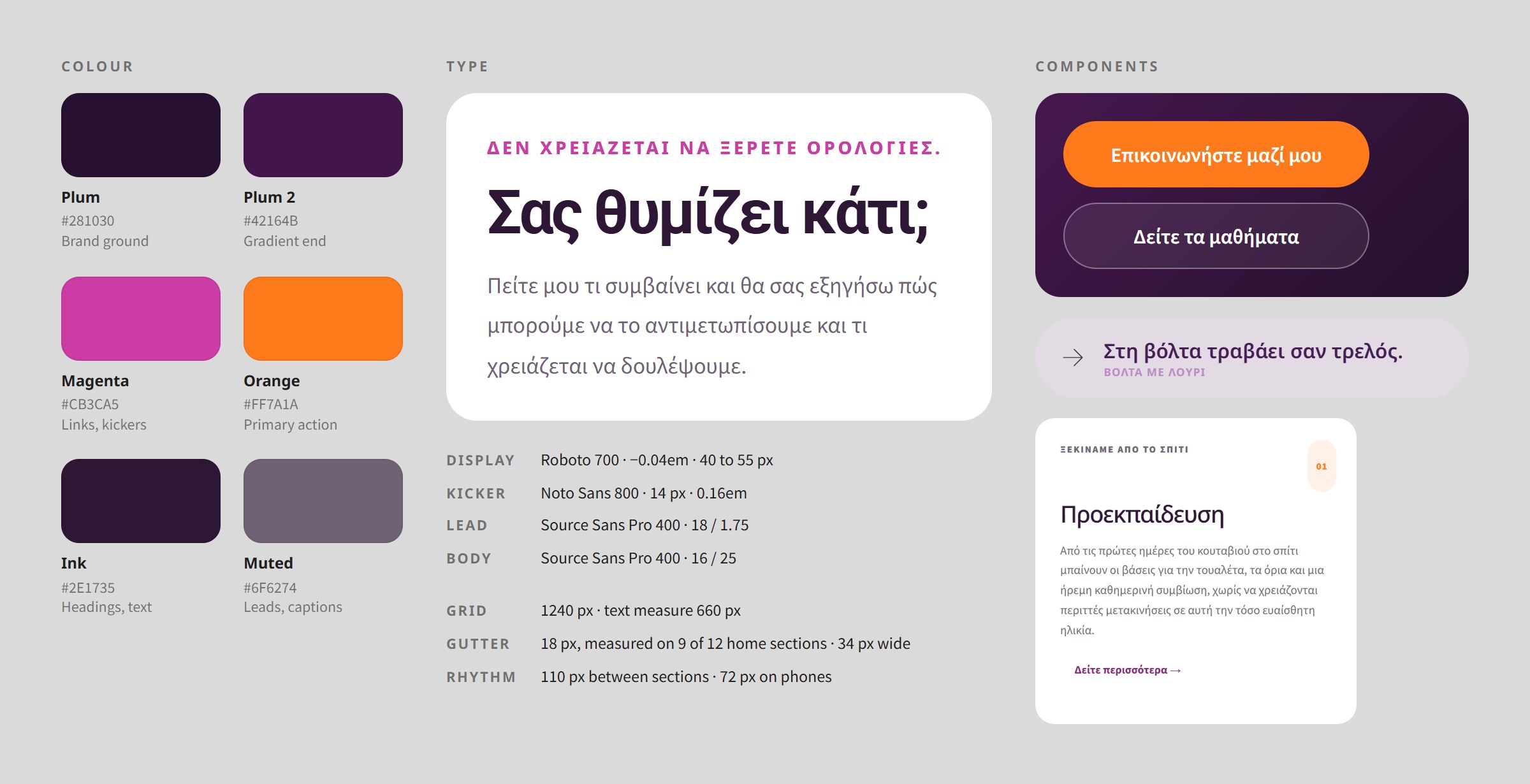
On every screen
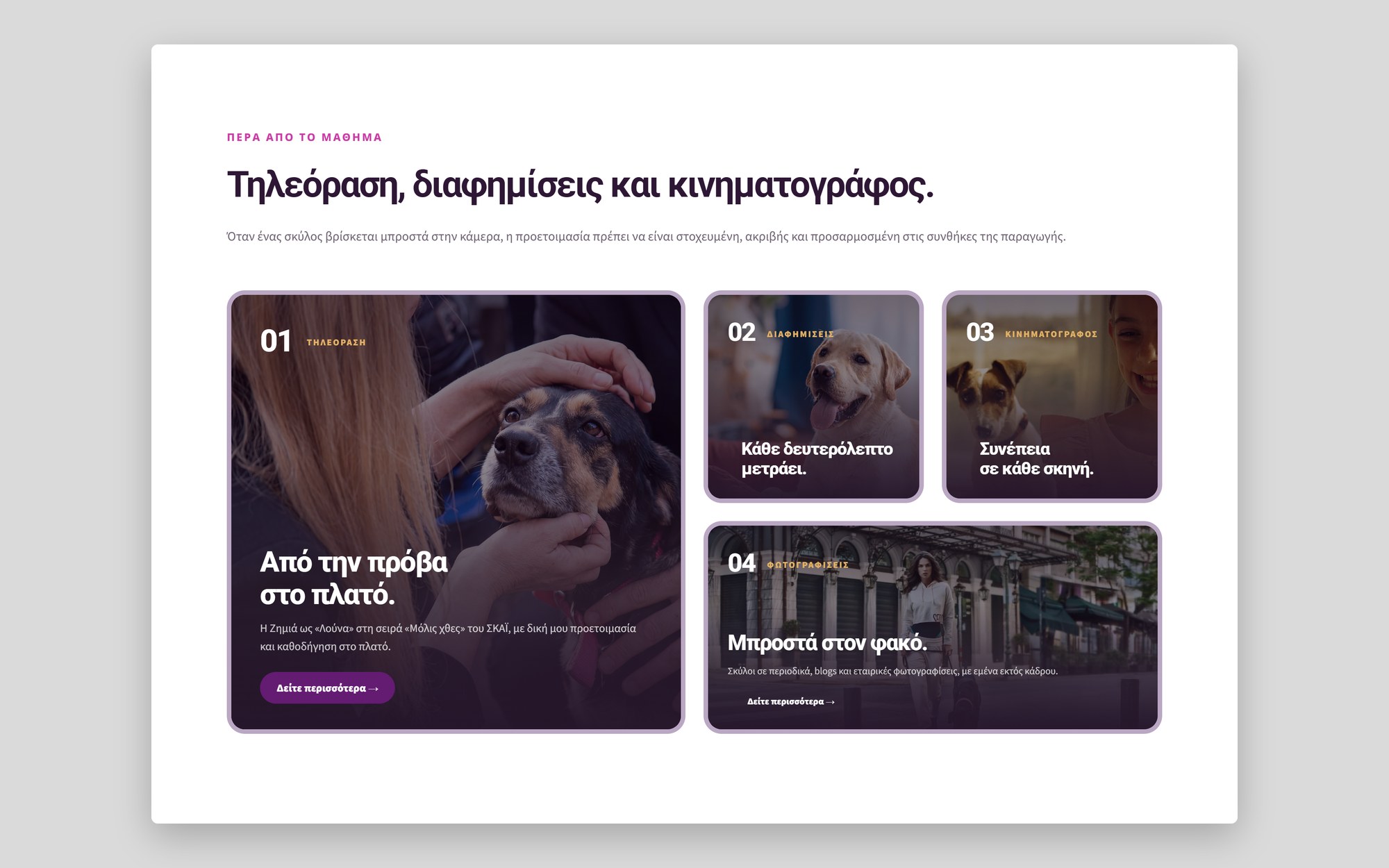
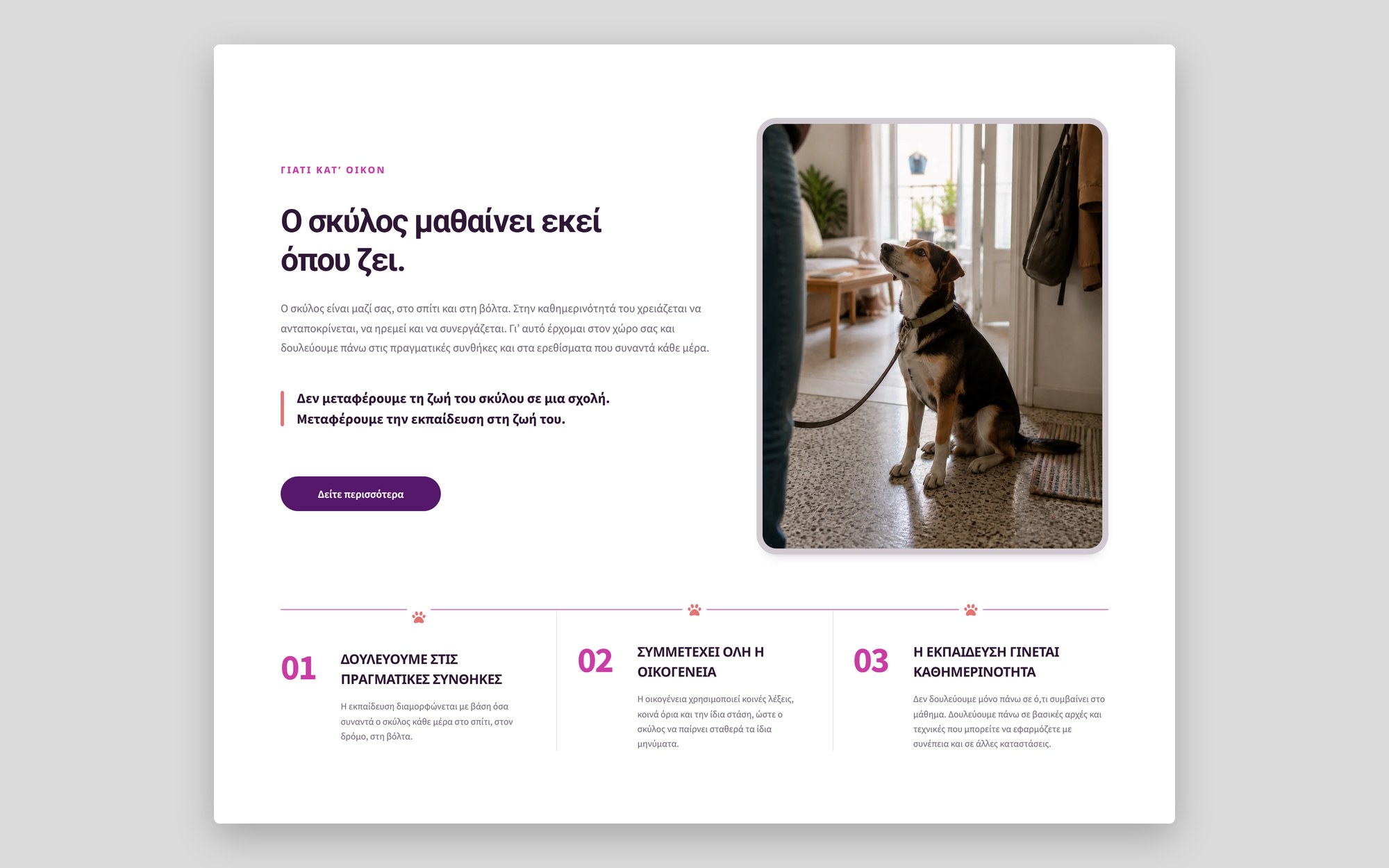
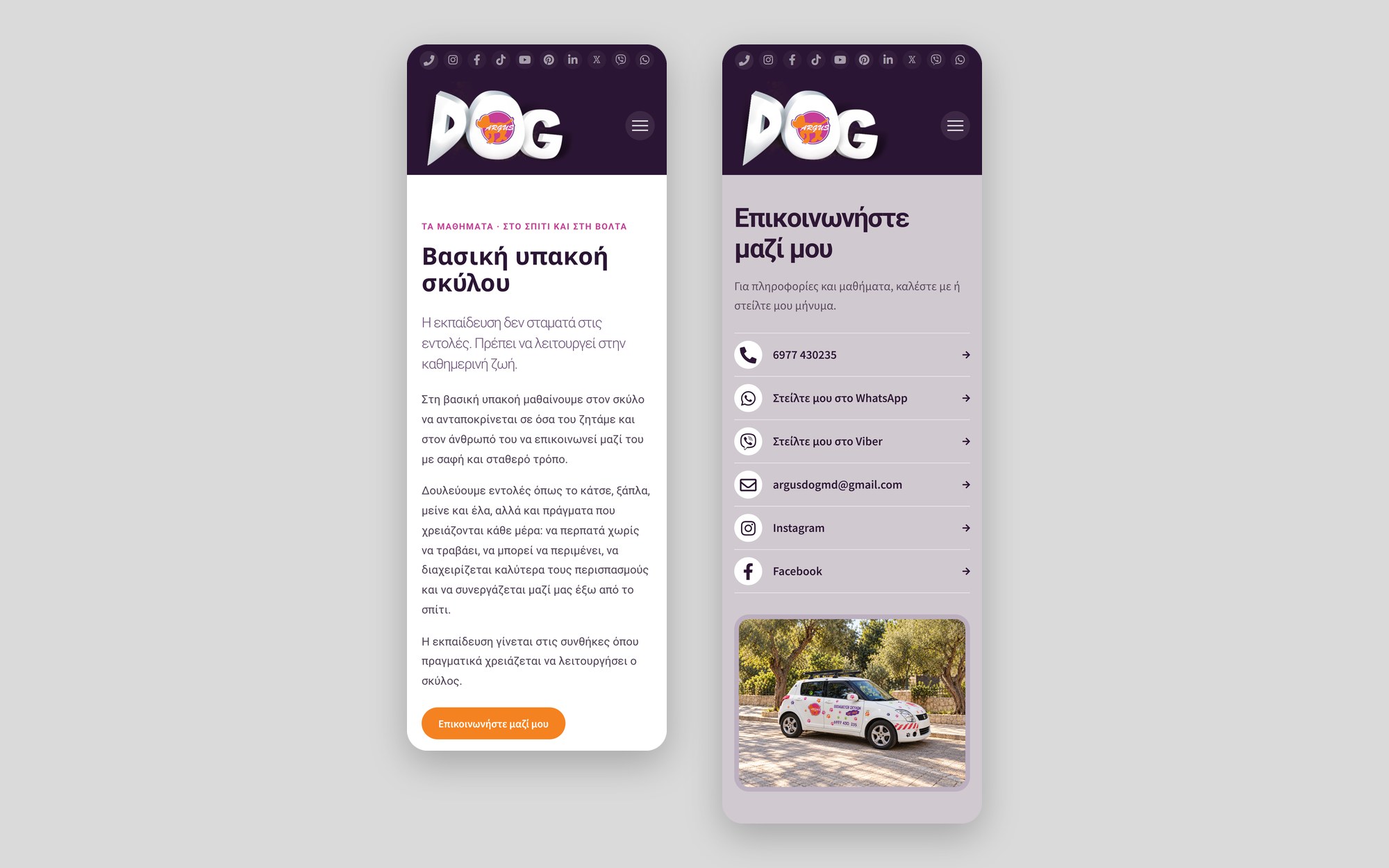
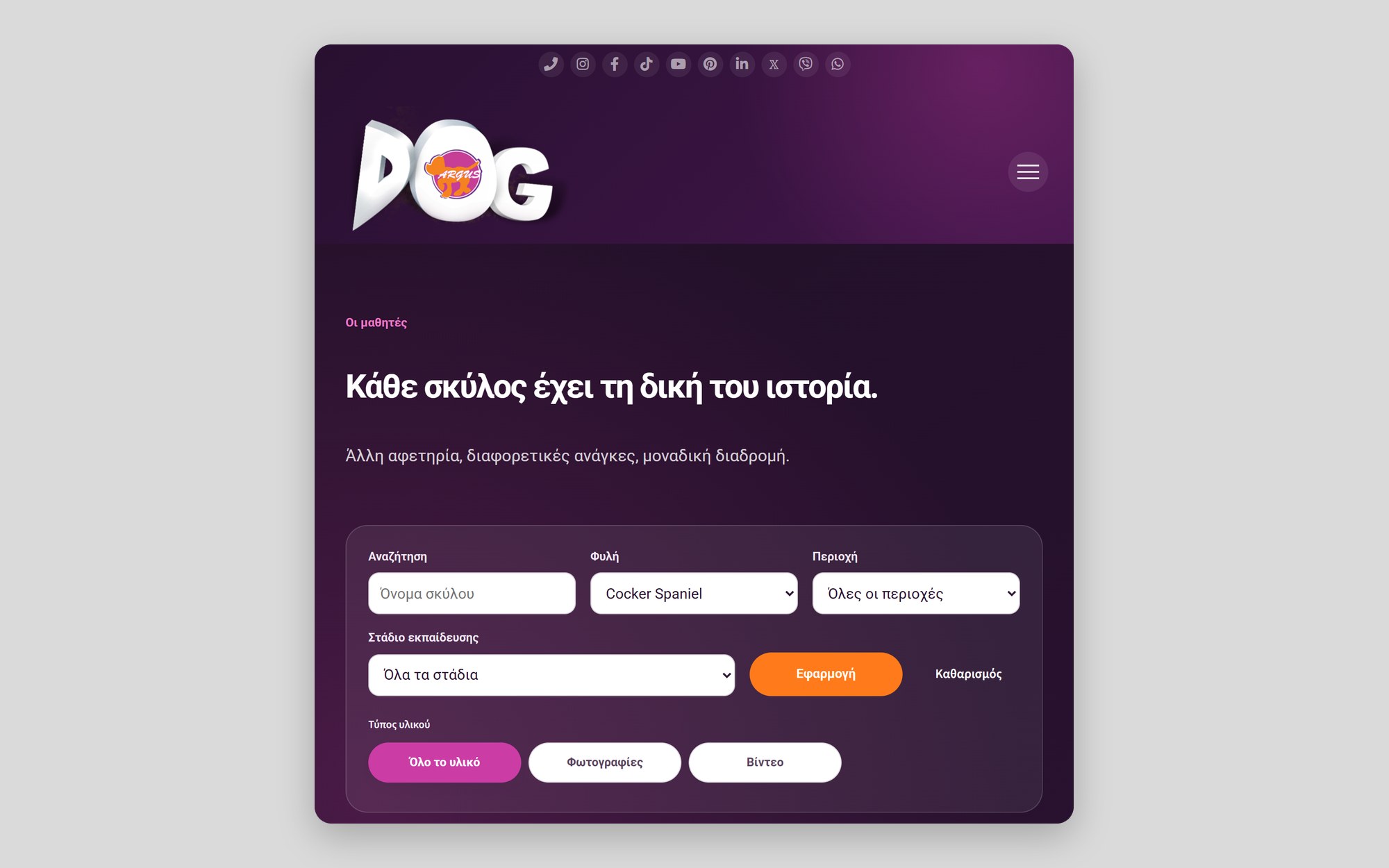
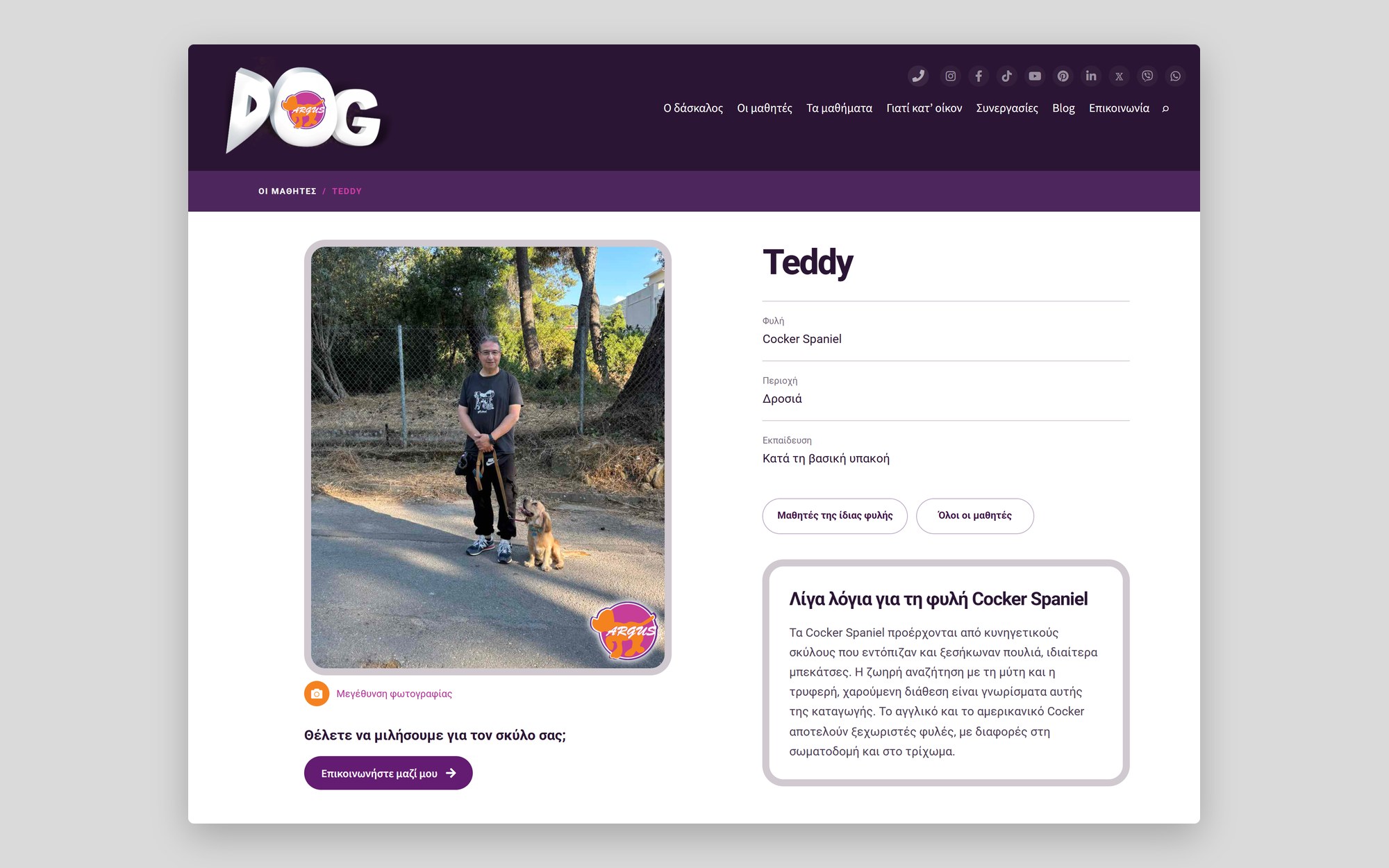
Each image is a whole section of the live site, at desktop, tablet or phone width.

Development
Most of this work does not show on the page. It keeps more than 1,400 pages rendering, findable and easy to keep up to date.
- 01A theme of its own
The site left its commercial theme for one built on WordPress and Elementor's own APIs. The old settings became CSS tokens, so every approved page kept its look, and the fonts are served by the site, not by Google.
- 02No raw code
The 2015 pages used the old theme's shortcodes. Each one got a small renderer, so hundreds of student pages still render as before.
- 03One student form
Adding a student takes one form. The address, the SEO title and description, the alt text and a watermarked copy of the photograph are generated from it.
- 04Same addresses
Every page kept its ID, date and address, and the old mobile home page redirects to the new one.
- 05Four kinds of URL
Moving between environments meant replacing addresses in four forms: plain, escaped inside Elementor's data, URL‑encoded and protocol‑relative, across more than 5,700 database rows.
Content architecture
The 623 articles sat in six categories that never overlap, so the structure stayed. Nine listing pages, the blog among them, depended on templates the new theme did not have and showed only a title. They were rebuilt, with filters and search.
In the student archive, breed and area existed only as a line of text on each page: «Φυλή: Cocker Spaniel - Περιοχή: Δροσιά». The new code reads that line and indexes it. Eleven years of spelling variants, such as Cocker and Cocker Spaniel or four ways to write mixed breed, were merged into one list of breeds, and the filters for breed, area, stage and media type run on that index. Each breed's text is written once and appears on every dog of that breed.
One reading template now sets the type of all 623 articles, from 2007 to 2026, and frames every video at its own proportion.
UX/UI
The menu, the header and the phone layout were designed together, so that calling is never more than one tap away.
- 01Seven entries
No Home link: the logo does that. Υπηρεσίες became Τα μαθήματα, so the teacher, the students and the lessons read like a school.
- 02One tap
The header stays on screen with the phone, WhatsApp and Viber. The stored number had brackets and spaces, so the tel: link is corrected in the output.
- 03One home page
Phones used to land on a separate copy of the home page. One responsive page now serves every screen.
- 04Accessible
Alt text on the photographs, names on the icon links, a skip link and zoom that works.
Content writing
Every page text was edited or written again in one voice: the trainer speaks in the first person and addresses the reader in the plural. Headings are statements, not labels: «Ο σκύλος μαθαίνει εκεί όπου ζει.» A lesson page now runs to six sections and ends with five questions.
SEO & AI search
Each page has one H1, and the H2s are written as answers that a search engine or an AI assistant can quote. The home page is marked up as a WebPage with its ten questions as FAQPage data, instead of the Article type it carried before.
On the student pages, the title, the description and the alt text of the photograph are built from the same fields as the filters, as in «Teddy — Cocker Spaniel, Δροσιά».
- 73 → 95PageSpeed accessibility on mobile, before and after launch
- 70+breeds, merged from eleven years of free text
- 200+areas in the student filters
- ~900words on the basic obedience page, which had two paragraphs
The archive was already the proof. It had to become data. Eleven years of free text now answers a search by breed, area and stage, and not one student page changed its address.